A failed endoscope leak test changes the next decision. The question is no longer simply how to continue the routine workflow. It is how to keep an uncertain device from returning to clinical use, obtain the correct device-specific direction, and make sure the next person understands its status.
For a new technician, that moment can feel intimidating. A procedure may be approaching, someone may be asking for an available scope, and the screen or test result may be unfamiliar. You do not need to improvise a repair. You need a clear escalation route and enough information to explain what happened.
This guide teaches that response. It does not provide a leak-testing technique, troubleshooting settings, or instructions for cleaning a damaged scope. Those actions depend on current instructions for the exact equipment and your facility's approved process.
Why a failed result deserves a different pathway
The FDA's June 24, 2025 letter concerning certain Olympus devices advises against using damaged devices or devices that failed a leak test. The letter applies to specified products and should be read in that context. It is not a recall of every endoscope or a new universal test procedure.
The general lesson for learning is straightforward: do not interpret a failed result as a minor inconvenience that routine processing automatically resolves. Follow the applicable failed-test pathway and keep the device's status explicit.
AAMI's public standards FAQ points readers to ST91 for endoscope processing guidance. Your department also needs the exact device and leak-tester instructions. A standard identifies the wider framework; the relevant manufacturer documents address equipment-specific requirements.
Know the pathway before the failure occurs
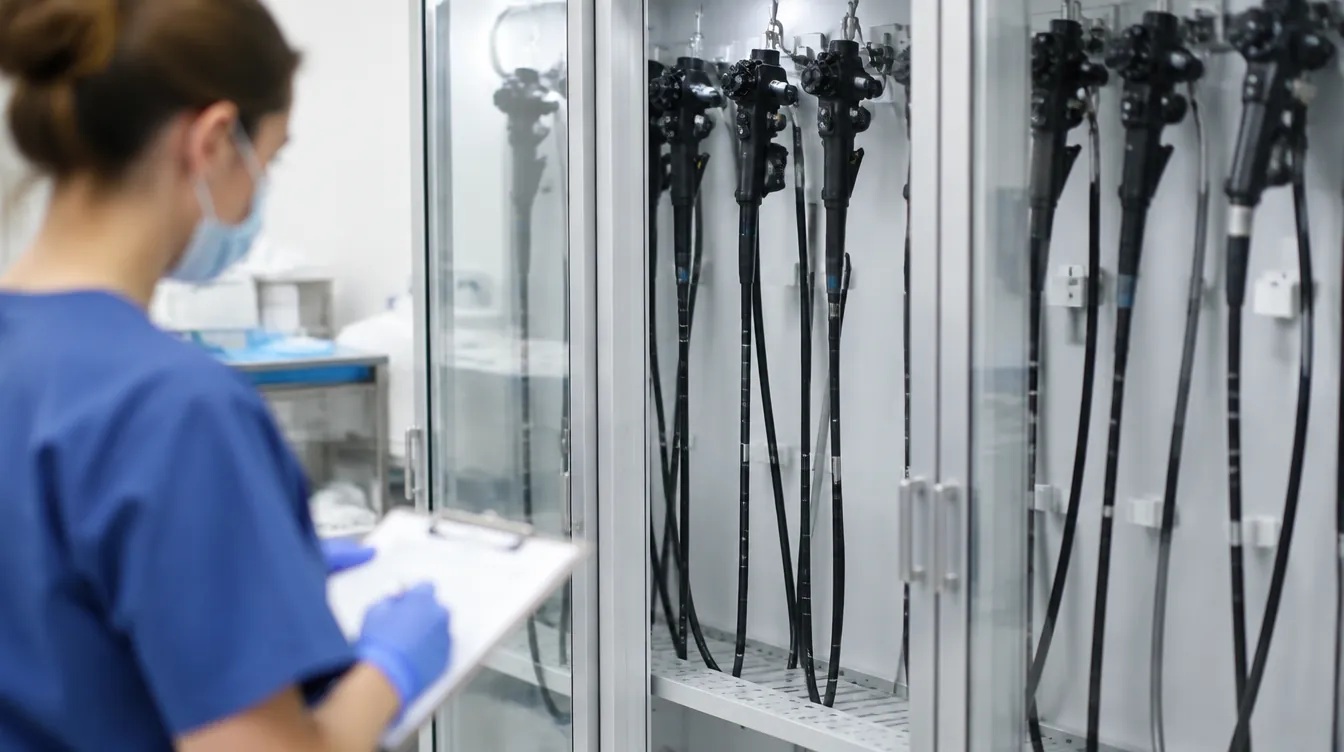
Orientation should explain what to do when a result is unacceptable or unclear. Ask where the relevant instructions are kept, which person receives the first report, and how the device is identified as unavailable through your facility's system.
Ask the same questions for evenings, weekends, and other periods when the usual educator is absent. A pathway that depends on finding one particular person can leave a new technician stranded. Your manager can explain the backup contact and the boundaries of your role.
This is not an invitation to build an unofficial procedure. If the instructions are missing or difficult to access, report that problem through the department's normal process. Staff need an approved route they can actually use while work is happening, not a collection of personal notes that different people interpret differently.
Start with exact identity
“Scope failed” is an incomplete handoff. The next person needs to know which device and which testing equipment were involved. Use the facility's approved identifiers rather than relying only on appearance, a nickname, or a storage position.
Device identity matters because instructions can differ between models. Equipment identity matters because the method and interpretation belong to that testing system. Ask your educator to show you where these details appear in approved records.
When identifiers are difficult to read or records do not agree, make that a separate unresolved issue. Do not fill the gap with a guess. A reliable response begins with knowing which item the decision concerns and keeping that identity consistent through review, service, and any eventual return.
Record the result without interpreting beyond your role
Preserve the test result in the approved system. Describe what the equipment displayed or what was observed under the authorized method. Include the relevant record reference and who was notified.
Avoid rewriting a failed result as “probably a connection issue” unless that conclusion has been established by the appropriate review. An assumption in a handoff can become the next person's starting fact. Keeping observation separate from interpretation prevents that drift.
If the result is unclear, say so. “Result requires review” is more useful than silently treating it as acceptable. Ask the designated reviewer how to proceed. The goal is to avoid both unsupported release and unsupported diagnosis while keeping the device's current status visible.
A suggested failed-test handoff table
The following is an educational planning aid. Use existing facility documentation and have any new form reviewed before adopting it.
| Question | Information to provide | Decision it supports |
|---|---|---|
| Which device? | Approved model and individual identifier | Matching instructions and records |
| Which test? | Testing equipment and record reference | Review of the actual result |
| What happened? | Observed outcome without guessed cause | Appropriate escalation |
| Where is the device? | Approved hold location and status | Preventing unintended use |
| Who knows? | Reviewer notified and acknowledgment | Ownership of the next action |
| What remains open? | Instructions, service contact, or review pending | An accurate shift handoff |
Do not include patient details in a personal worksheet. Any clinical linkage belongs in the facility's authorized system. The table helps organize a conversation; it does not replace traceability records or establish a reporting requirement.
Avoid borrowing a damaged-scope procedure from another model
A colleague may remember how a different scope was handled. That memory can help identify a question, but it cannot establish the correct method for this device.
For example, an older publicly available Olympus TJF-Q180V reprocessing manual directs users who identify a leak to contact Olympus for instructions before returning the endoscope for repair. This model-specific example illustrates why a failed result needs the correct manufacturer's direction. The linked manual is not presented here as current instructions for your inventory.
Do not copy its handling sequence, or a sequence from any other manual, into practice without confirming the current applicable documents. Ask the manufacturer and the facility's designated personnel to resolve the specific question. A blog should help you recognize that boundary rather than hide it behind confident step-by-step language.
Keep handling and clinical availability distinct
A device can be unavailable for clinical use while still requiring an authorized plan for handling, processing before service, and transport. “Do not use” does not answer every question about what happens next.
The facility and service provider need to establish the applicable requirements. Ask which instructions govern the damaged device, who is coordinating the service request, and how its condition and processing status will be communicated. Do not assume that routine cleaning is always appropriate or that no further handling is needed.
The FDA's reusable-device reprocessing overview explains the importance of following labeling. For a damaged device, the practical educational point is to obtain the applicable authorized direction instead of improvising from a familiar routine.
Do not keep testing until you obtain a preferred answer
An unexpected result can create pressure to repeat the test. Whether repeat testing or a setup check is appropriate depends on the manufacturer's instructions and the facility's authorized process. This article does not prohibit an instructed verification step; it cautions against an undocumented search for a passing result.
Ask the reviewer which action is authorized and how the original result will remain recorded. A later result should not silently erase the earlier event or the reasoning used to interpret it.
This distinction is useful for students. A permitted check answers a defined question under an established method. Repeating an action merely because the first outcome is inconvenient has no such foundation. Learn to explain the purpose of the next step before carrying it out.
A hypothetical busy-shift conversation
Imagine that a scope has an unacceptable result and a coworker asks whether it will be ready for the next procedure. This is a fictional learning scenario, not a patient story.
A clear response might say: “This device is not available while the failed result is being reviewed. The designated reviewer has been notified. Please use the department's approved process to confirm an alternative.” The exact wording should fit your role and facility.
Notice what the response includes: current status, decision ownership, and the next communication route. It does not speculate about repair time, promise that the scope will pass later, or tell clinical staff how to manage a patient.
The clinical team owns clinical decisions. The technician contributes accurate availability information. Keeping those roles clear helps prevent a scheduling concern from becoming an unsupported equipment decision.
Plan the service handoff deliberately
When service is required, the receiving team needs an accurate account of the device and concern. Ask which approved records accompany the device, who confirms the service provider's requirements, and how the facility documents transfer.
A service handoff should not depend on a sticky note that can become separated from the item. Use the established method for communicating status and required information. Protect confidential data and do not add patient information to a shipping document unless the authorized process specifically requires it.
Also confirm who will follow up. A device can leave the department with a clear concern and still become difficult to track if nobody owns the next update. The learning goal is continuity: someone should be able to determine where the device is and what action is pending.
Returning from service is another decision point
Arrival from service should trigger the facility's approved return process. Ask how the service documentation is reviewed, what device-specific checks and processing are required, and who authorizes clinical availability.
Do not infer that a shipping box, a service label, or a vendor email alone establishes readiness. Your department needs the evidence its process requires. If documents are missing or the device identity does not match, keep that discrepancy visible and escalate it.
This is a good topic for a supervised educational exercise. Give a learner fictional service paperwork and ask which information they would need before moving forward. The exercise should assess recognition of missing information rather than invite them to invent a release criterion.
Review patterns without blaming the last handler
Repeated failures may justify a broader review, but the most recent person to handle a scope is not automatically the cause. Keep the discussion grounded in documented events.
A supervisor might organize questions about device history, testing equipment, access to instructions, training, maintenance, and handling transitions. These are suggested areas for inquiry, not a diagnostic checklist that establishes causation.
Make it easy for staff to report an unexpected result without being pressured to change the record. If people believe a failure will automatically be treated as their fault, useful information may be lost. Leaders can support factual reporting by asking what happened, what evidence is available, and what still needs review before assigning a cause.
Teach the response through explanation and observation
A learner should be able to explain the failed-result pathway in plain language. Where is the current instruction? Who receives the report? How is the device kept unavailable? Which action requires additional authorization?
Then an educator can assess the learner under the facility's competency process. A classroom discussion or online article can introduce the concepts, but it cannot establish competence on every device and testing system.
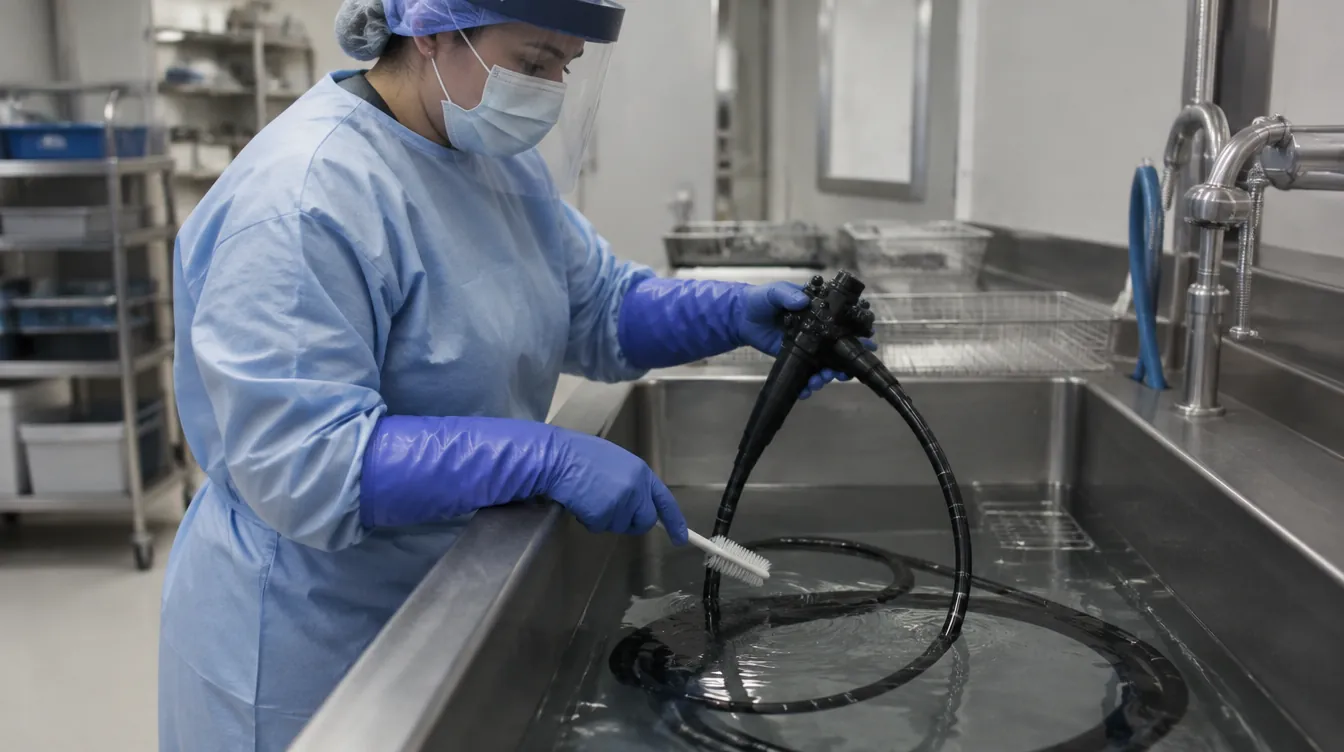
For a broader understanding of the reprocessing sequence, read endoscope cleaning before high-level disinfection. This article adds the exception pathway: what to communicate when the ordinary process cannot simply continue. Keeping those learning goals separate makes each easier to understand.
Prepare useful questions for your educator
Bring the exact point where your understanding stops. “What happens after a failed result on this model?” is easier to answer than “What do we do with broken scopes?” Show the educator where you looked for the current procedure and identify any missing information.
Ask how the department distinguishes an equipment setup issue from a device concern through its authorized process. Ask who may perform troubleshooting and how that work is recorded. These questions help you understand role boundaries without attempting troubleshooting yourself.
Finally, ask how the next shift learns the device's status. A well-understood failure response includes communication across time, not only the action taken immediately after the result appears.
Build a small practice exercise
Use a fictional device identifier, a fictional unacceptable result, and a fictional service request. Have the learner prepare a brief handoff using the table above. No real device needs to be damaged or taken out of service for this exercise.
Review whether the handoff identifies the item, preserves the observation, names the decision owner, and states the unresolved question. If it promises a repair outcome or guesses the cause, ask the learner to revise it.
Then change one fact: the educator is unavailable, the service paperwork is missing, or the device identity is unclear. Ask which approved contact or process resolves that gap. This teaches flexible communication while leaving actual technical decisions with the correct authority.
Frequently asked questions
Is a passing leak test proof that an endoscope is clean?
No. Do not treat a leak-test result as evidence that all reprocessing requirements are complete. Follow the full current device-specific workflow and the facility's release process.
Should I repeat a failed test until it passes?
Do not repeat testing merely to obtain a preferred outcome. Follow any authorized verification or troubleshooting steps in the applicable instructions and preserve the original result in the approved record.
Can I use instructions from a similar endoscope?
Do not assume that similar appearance means identical instructions. Confirm the exact device and testing equipment, obtain current applicable documents, and escalate unresolved differences.
Does a failed result mean every scope from that manufacturer is unsafe?
No. A failed result concerns the identified device and requires the applicable response. Product safety communications have their own scope; review the specified models rather than extending a notice to an entire manufacturer.
Does joining the ATS CER waitlist qualify me to reprocess scopes?
No. The free waitlist expresses interest in an upcoming educational offering. Device-specific workplace training, competency assessment, and authorization remain the facility's responsibility.
Your next step
Find the approved failed-test pathway for the equipment you use and confirm the backup contact for your shift. Being able to explain that pathway is a practical learning goal before you encounter an unexpected result.
For updates about ATS's upcoming endoscope education, join the free CER class waitlist. No course date, price, or format is promised here. This guide supports learning and communication; current manufacturer instructions and approved facility procedures govern actual handling and processing.