If you’ve decided to become a sterile processing technician, the next question is how to train. There’s no single right answer — it depends on your budget, your schedule, how you learn best, and whether there’s a school near you. Here’s an honest comparison of both formats, including the cases where the more expensive option genuinely is the better one.
One thing to settle up front: both paths lead to the same credential. Whether you learn live over Zoom for $1,850 or train in a classroom for $2,500, you sit for the same CRCST exam — 150 multiple-choice questions over three hours — on the same HSPA 9th Edition material, and you meet the same 400-hour hands-on requirement. The formats differ in how you get there, not where you end up.
The two formats at a glance
| Live virtual | In-person | |
|---|---|---|
| Cost | $1,850 | $2,500 |
| Start date | Next cohort | Next cohort |
| Length | Self-paced | 16 weeks |
| Schedule | Fully flexible | Set weekly class times |
| Instruction | AI voice-guided lessons | Live instructor over Zoom |
| Hands-on practice | Arranged via internship | Arranged via internship |
| Location | Anywhere | Anywhere |
| Payment plan | One-time payment | $500 down, balance over 10–12 weeks |
Both include the full curriculum, quizzes, practice exams, and access to the private Discord community.
Live virtual classes — $1,850
Best for: people who want structure and a live instructor without leaving home.
You attend scheduled live classes over Zoom for a 16-week cohort, ask questions in real time, and get the accountability of classmates moving through the material with you — plus the same online materials to review between sessions. If you miss the reason a certain sterilization parameter matters, you raise your hand and ask a human who has worked in a department, instead of re-reading a paragraph and hoping.
It gives you the structure of a classroom without requiring you to live near Philadelphia. Payment plans ($500 down, balance over 10–12 weeks) spread the tuition across most of the cohort.
- Live instruction and a set schedule keep you on track
- Attend from anywhere in the country
- Fixed class times; you attend live rather than at your own pace
Explore live virtual classes →
In-person training — $2,500
Best for: people near Philadelphia or Cherry Hill who want hands-on practice and the strongest path to a hospital internship.
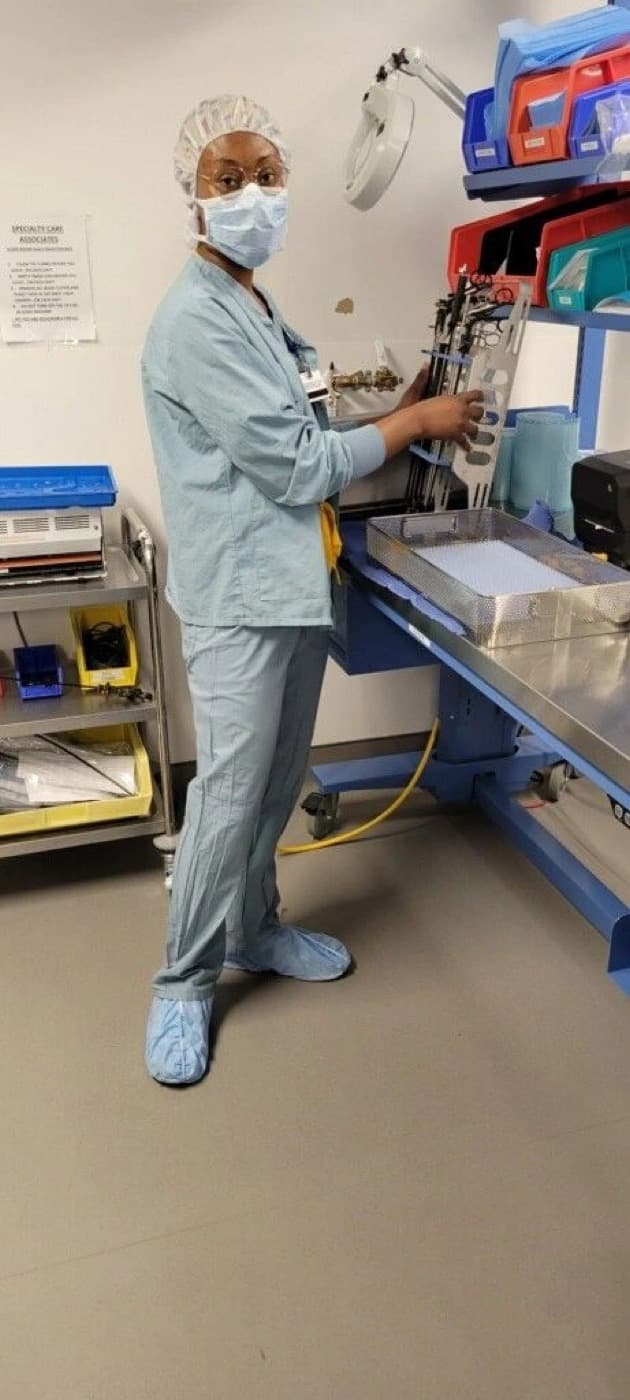
You train in a classroom over a 16-week cohort with real instruments and instructors, and get direct support into a clinical internship — the experience employers want most. There are things a screen can’t fully teach: the feel of inspecting a box-lock on a hemostat, loading a sterilizer cart, the muscle memory of donning PPE for decontam. In-person students build those habits before day one of an internship. We go deeper on why this matters in Hands-On Training in Sterile Processing Education.
- Hands-on practice with real instruments, plus internship placement
- In-person support, structure, and networking in the regional market
- Requires being local; highest cost
If you’re in the Philadelphia / South Jersey / Delaware corridor, there’s an extra reason to consider it: Pennsylvania, New Jersey, and Delaware all require certification by law, so local hospitals hire certified techs steadily — and in-person students walk into that market with hands-on hours already moving.
When in-person genuinely beats online
We sell all three formats, so take this as straight talk, not upsell:
- You learn by doing. If reading about instrument assembly doesn’t stick but physically doing it once does, the classroom pays for itself.
- You have no healthcare background. In-person gives you a guided first exposure to instruments, PPE, and department workflow before your internship.
- You want the fastest route to hands-on hours. The in-person program has the strongest internship pipeline, and the 400 hours are usually the slowest step in the whole journey.
- Accountability is your weak spot. A room you have to show up to beats a login you can ignore.
When virtual is the right call
- There’s no school near you. Most of the country has no local sterile processing program, and the live virtual class reaches every state.
- You’re working full-time. Evening cohorts are easier to build a week around than a commute.
- Budget is the constraint. Virtual plus the $140 exam fee is the less expensive of the two complete paths to the CRCST. See the full breakdown in What Does Certification Really Cost?
- You’re already working in a hospital. If you can get your hands-on hours where you work, the classroom’s biggest advantage matters less.
A quick way to decide
- No school nearby, or on a budget? Take the live virtual class — it works from any state.
- Want live teaching and accountability from home? Same answer: virtual.
- Local to Philadelphia/Cherry Hill and want hands-on + internship? Go in-person.
Whichever you choose, both prepare you for the same CRCST credential on the HSPA 9th Edition. The “best” program is simply the one you’ll actually finish. (ATS is an independent training provider and is not affiliated with HSPA.)
For the full journey — training, exam, hours, first job — read How to Become a Sterile Processing Technician, or map your timeline with How Long Does It Take?
Still not sure? Grab our free Career Roadmap and we’ll help you think it through, or browse the FAQ.
Frequently asked questions
Is online sterile processing training as good as in-person? For the knowledge side, yes — all formats cover the same HSPA 9th Edition material and lead to the same CRCST exam. In-person adds guided hands-on practice, which matters most if you have no healthcare background or learn best by doing.
Can I really get CRCST-certified fully online? The coursework and exam prep can be fully online, and the exam is taken at a Prometric testing center. The 400 hands-on hours happen in a real department — ATS helps arrange that through internship placement, wherever you live.
How much does each format cost? Live virtual is $1,850 and in-person is $2,500. Both offer payment plans with $500 down and the balance over 10–12 weeks. The CRCST exam fee ($140) is paid separately to HSPA.
How long does each format take? Both virtual and in-person cohorts run 16 weeks.
What if I fall behind or don’t pass? Talk to your instructor. ATS considers course retakes at our discretion, case by case — it isn’t automatic, so ask rather than assume. The exam fee for a re-sit is set by HSPA, which is one more reason to use every practice test before exam day.