After years of training sterile processing technicians — and years on the hospital floor before that — I've become convinced of one thing: you cannot read your way to competence in this field. Sterile processing is a craft, and crafts are learned by doing. This post is about what "doing" actually looks like, why so many programs skip it, and how to tell whether the program you're considering will make you employable or just examinable.
The gap between passing and performing
Plenty of programs can get a student to pass the CRCST. Memorize the HSPA 9th Edition, drill enough practice questions, and the exam is winnable. But passing an exam and being ready to stand at a decontamination sink on day one are two very different things.
A new technician has to feel the difference between a properly cleaned lumen and one that still harbors bioburden. They have to recognize a damaged instrument by sight and touch, assemble a complex tray under time pressure, and read a sterilizer printout without hesitation. None of that lives on a flashcard.
HSPA itself builds this reality into the credential. Passing the exam alone doesn't make you a CRCST — the association also requires 400 hours of documented hands-on experience in a sterile processing department, completed either before you apply or within six months of passing under a provisional certification. In other words, the certifying body agrees with us: knowledge without hours at the sink is not competence. (More on how the exam itself works in What Is the CRCST Exam?.)
What competency actually looks like, station by station
When we say "hands-on," we don't mean watching a video of someone else's hands. Here's what a technician actually has to be able to do in each area of a working department — and what we train toward.
At the decontamination sink
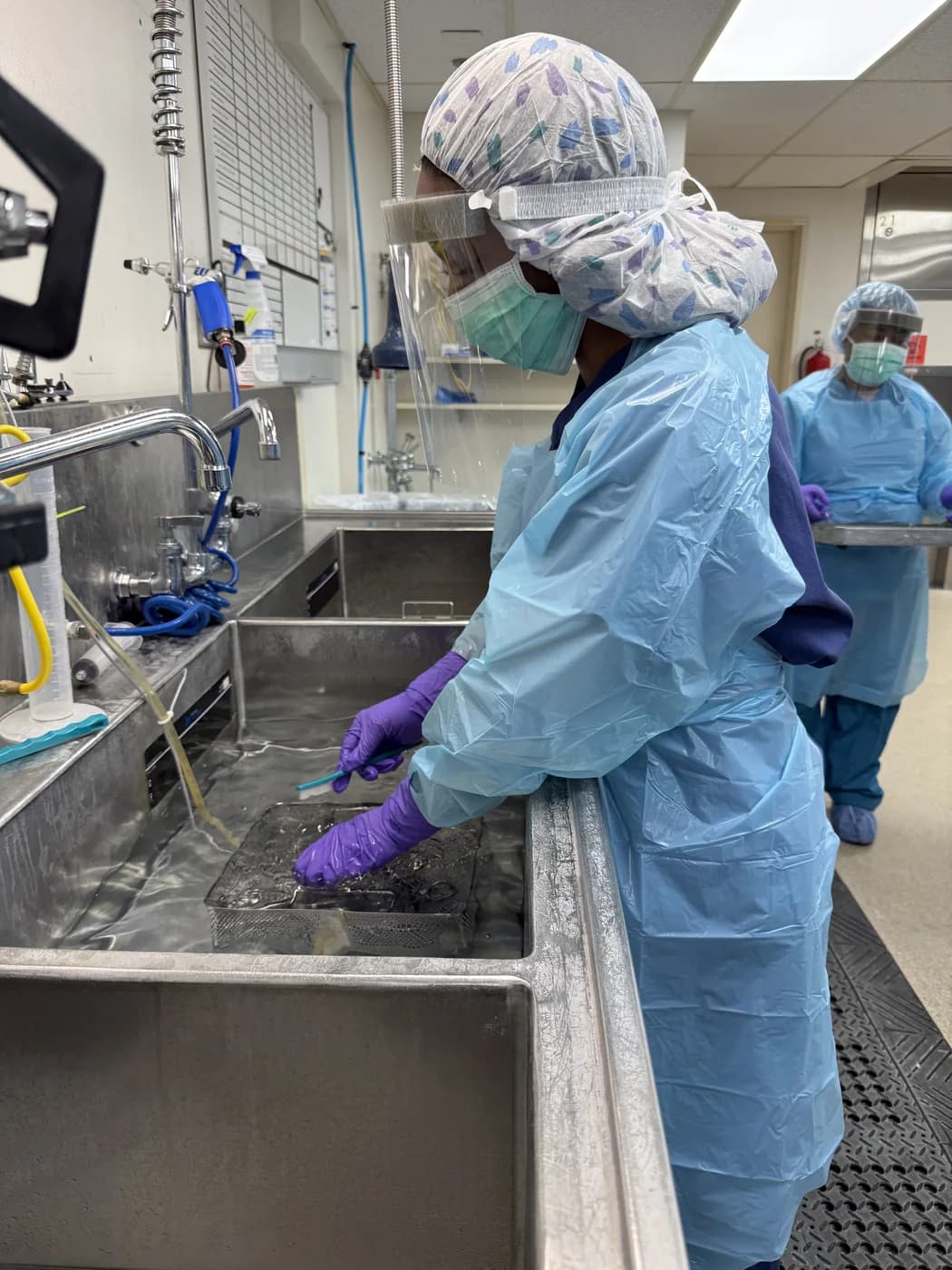
Decon is where new techs sink or swim, sometimes literally. Real competency here means donning and doffing PPE in the right order without thinking about it, sorting instruments at the sink instead of dumping a tray into the basin, and knowing which items get brushed under the waterline and which never touch an ultrasonic. It means reading a manufacturer's instructions for use (IFU) and noticing when the soak time or brush diameter you're about to use doesn't match it. A lumen that looks clean can still be dirty; a tech who has flushed hundreds of them develops a feel for resistance and flow that no slide deck can teach.
At the prep and pack table
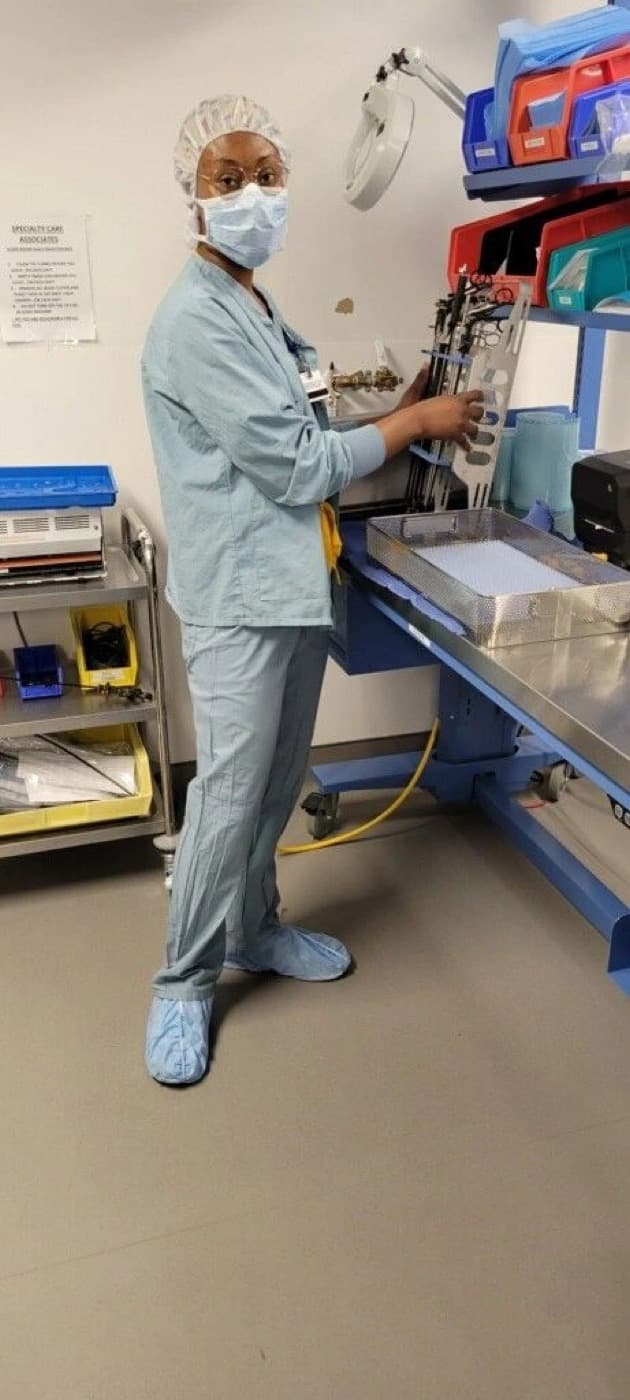
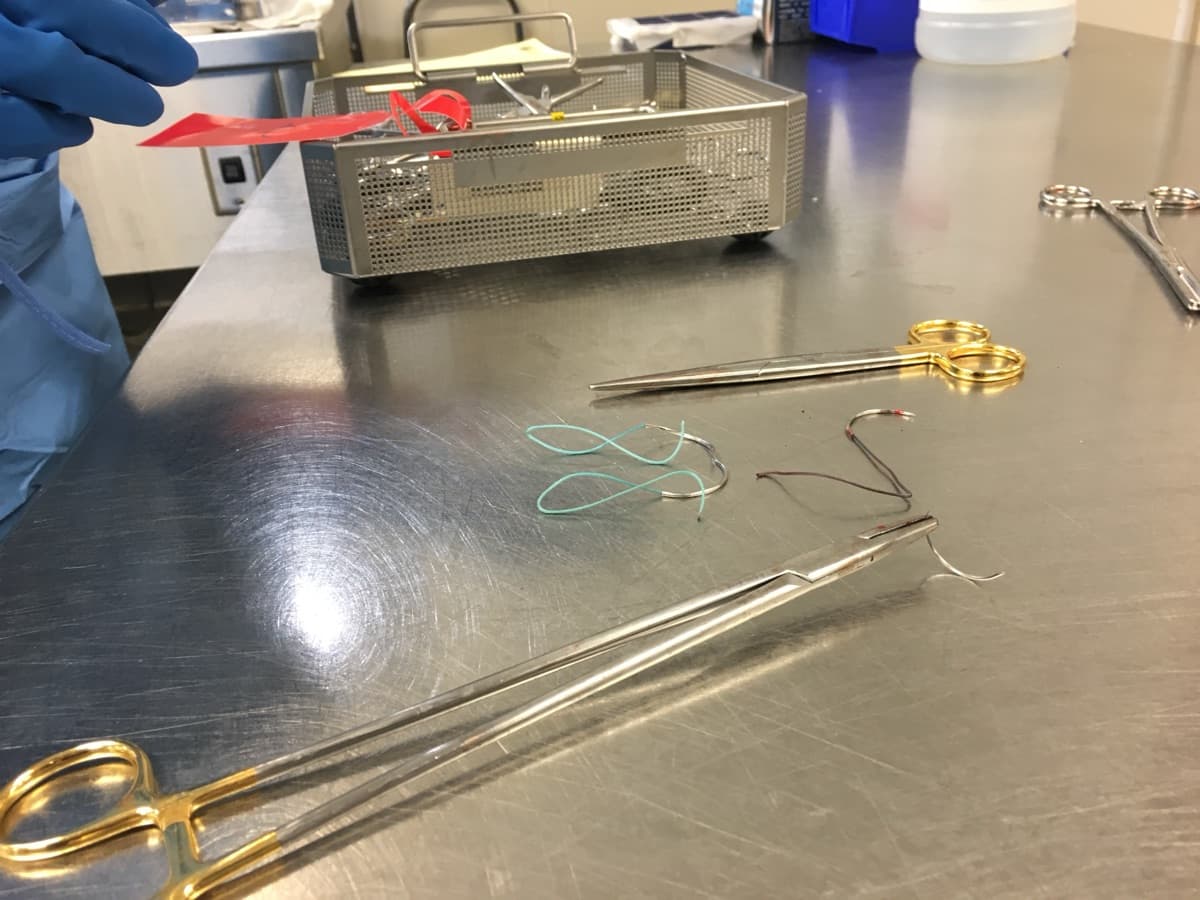
Assembly is inspection first, packaging second. A competent tech runs every scissor, clamp, and needle holder through function checks — do the jaws approximate, do the ratchets hold, is there a crack hiding at the box lock? They can spot pitting, staining, and worn insulation on laparoscopic instruments, and they know the difference between a stain that wipes off and corrosion that condemns the instrument. Then comes the count sheet: building a 90-piece major tray accurately, with indicators placed correctly and the wrap or rigid container closed so it will actually stay sterile in transport.
At the sterilizers
This is where "the why" matters most. A tech has to load a steam sterilizer so that air removal and steam contact actually happen — not just so everything fits. They have to read a cycle printout and know what a failed Bowie-Dick test or a positive biological indicator means for every load since the last good result. Guessing here isn't an inconvenience; it's a patient-safety event.
In sterile storage and case carts
Even the last step has craft in it: handling wrapped trays without compressing them, checking package integrity and event-related sterility, rotating stock, and building a case cart against a surgeon's preference card so the OR isn't hunting for an instrument mid-procedure.
If you're brand new and some of these terms are unfamiliar, start with What Is Sterile Processing? — then come back. The point stands either way: every one of these skills is physical, and physical skills require practice.
Why hands-on instruction sticks
There's a reason we build every ATS path — live virtual, and in-person — around real practice and real instructors rather than a stack of recorded videos:
- Muscle memory beats memorization. Repeating the decontamination-to-sterile workflow with your own hands encodes it in a way reading never will. Students remember the tray they mis-assembled far longer than the paragraph they highlighted.
- Mistakes become lessons, safely. A student who mis-assembles a tray in class learns from it before a patient is ever involved. In a classroom, an error costs a conversation. In a department, it can cost a delayed surgery — or worse.
- Questions get answered in the moment. A live instructor who has worked in an SPD can correct technique on the spot — the single fastest way to improve. We've watched a thirty-second correction at the sink save a student weeks of practicing the wrong habit.
- Feedback builds judgment, not just skill. The real job is full of edge cases: an IFU that conflicts with department habit, an instrument you've never seen, an OR pushing for a tray before the cycle completes. Talking those through with someone who has lived them is how judgment forms.
How hands-on works in each format
Students sometimes assume "hands-on" and "online" can't coexist. They can — if the program is built for it. Here's how we think about the trade-offs across our three paths (a deeper comparison lives in Online vs. In-Person Sterile Processing Programs):
| Path | What practice looks like | Best for |
|---|---|---|
| Live virtual ($1,850) | Real instructors teaching live over 16 weeks, demonstrations, guided practice, and direct Q&A every session | Students who want accountability without commuting |
| In-person ($2,500) | Classroom instruction in the Philadelphia / Cherry Hill area with instruments in your hands | Students who learn best by touch, with an instructor beside them |
Every path runs on the same HSPA 9th Edition curriculum and the same philosophy: you will practice the work, not just read about it.
The internship is where it all comes together
The classroom — physical or virtual — is where you build the foundation. The department is where it becomes real. That's why we've spent years building hospital internship placements with major health systems across the Philadelphia region: so our students can put real hours into a real department, with real instruments and real pressure, before they ever apply for a job.
Those hours do double duty. They complete your hands-on learning, and they count toward the experience HSPA requires for full CRCST certification. A student who finishes an internship walks into an interview with something most applicants don't have: a supervisor who has seen them work.
Questions to ask any program before you enroll
If you're choosing a program — ours or anyone's — look past the marketing and ask these directly:
- How will I actually practice the work? Vague answers mean the answer is "you won't."
- Who teaches, and have they worked in an SPD? (We wrote a whole post on this: What Makes a Great Sterile Processing Instructor.)
- How do I get my hands-on hours for certification? A program with no answer is leaving the hardest part to you.
- What happens if I don't pass the exam the first time?
- Can I talk to a graduate? Real programs have real success stories.
A program that can't answer these clearly is selling you an exam result, not a career.
Aseptic Technical Solutions is an independent training provider and is not affiliated with HSPA. Our curriculum follows the HSPA 9th Edition.
If you're weighing your first step into the field, start with How to Become a Sterile Processing Technician or grab our free Career Roadmap. The work is learnable — but only if you actually get to do it.
Frequently asked questions
Can you really learn sterile processing online?
You can learn the knowledge online — sterilization science, instrumentation, infection prevention — and our virtual students prove it every cohort. What can't happen through a screen alone is physical repetition, which is why we pair every path with practice assignments and hospital internship placement.
Do I need hands-on hours to become a CRCST?
Yes. In addition to passing the exam, HSPA requires 400 hours of hands-on experience in a sterile processing department — completed beforehand, or within six months of passing the exam under provisional certification.
How do ATS students get hands-on practice?
Through practice built into the coursework, live instruction from working practitioners, and internship placements with major health systems in the Philadelphia region. In-person students also get classroom time with instruments in hand.
What if I've never worked in healthcare before?
That describes most of our students. The program assumes no prior healthcare experience — it starts from the fundamentals and builds up through the full HSPA 9th Edition curriculum over 16 weeks.
Which format should I choose if hands-on learning matters most to me?
If you're near Philadelphia or Cherry Hill, in-person gives you the most direct practice. If not, live virtual plus an internship placement gets you to the same destination. Compare formats in detail in Online vs. In-Person Programs.