If you're shopping for a sterile processing program, you're really shopping for an instructor. The curriculum is largely set by the HSPA 9th Edition — what differs from one program to the next is the person teaching it. Having spent years on both sides of the table — first as technicians and leads on the hospital floor, then training new techs since 2017 — here's what we think separates a great sterile processing instructor from a merely adequate one.
They've actually done the work
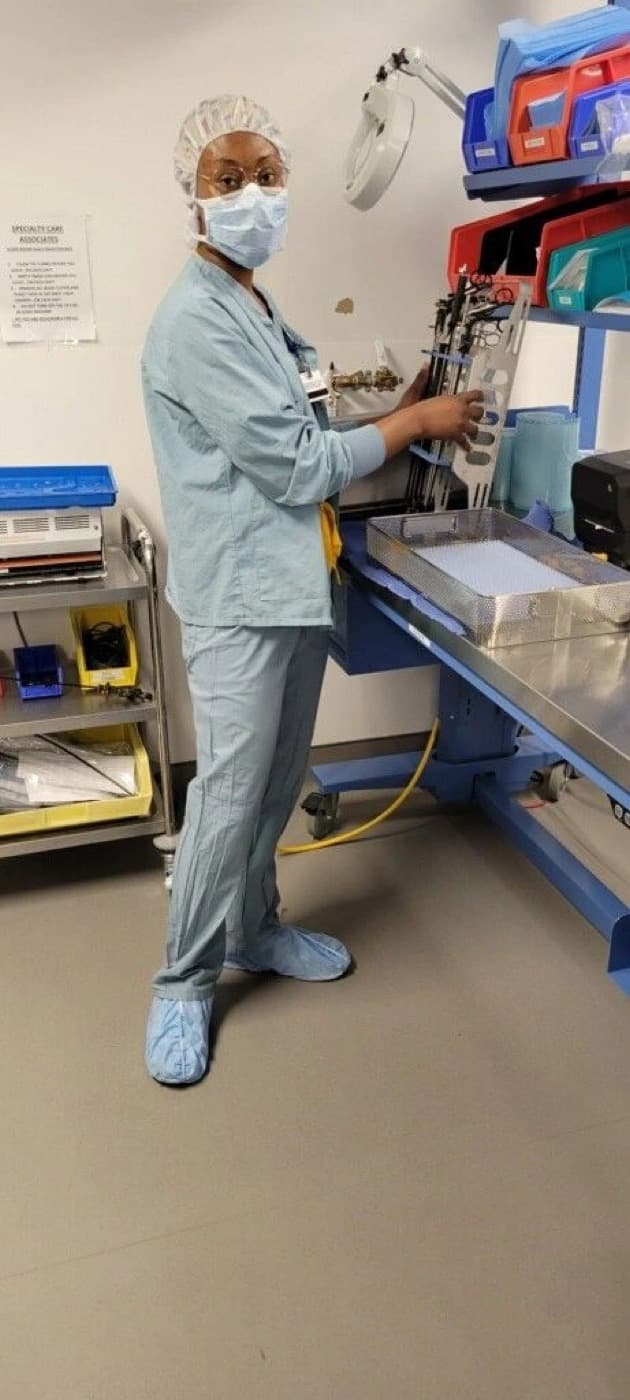
This is non-negotiable. An instructor who has stood at a decontamination sink, assembled trays against an OR deadline, and chased down a failed sterilizer cycle teaches differently than someone reading from slides. They can answer the question behind the question. They know which mistakes new techs really make, because they've made them and watched others make them.
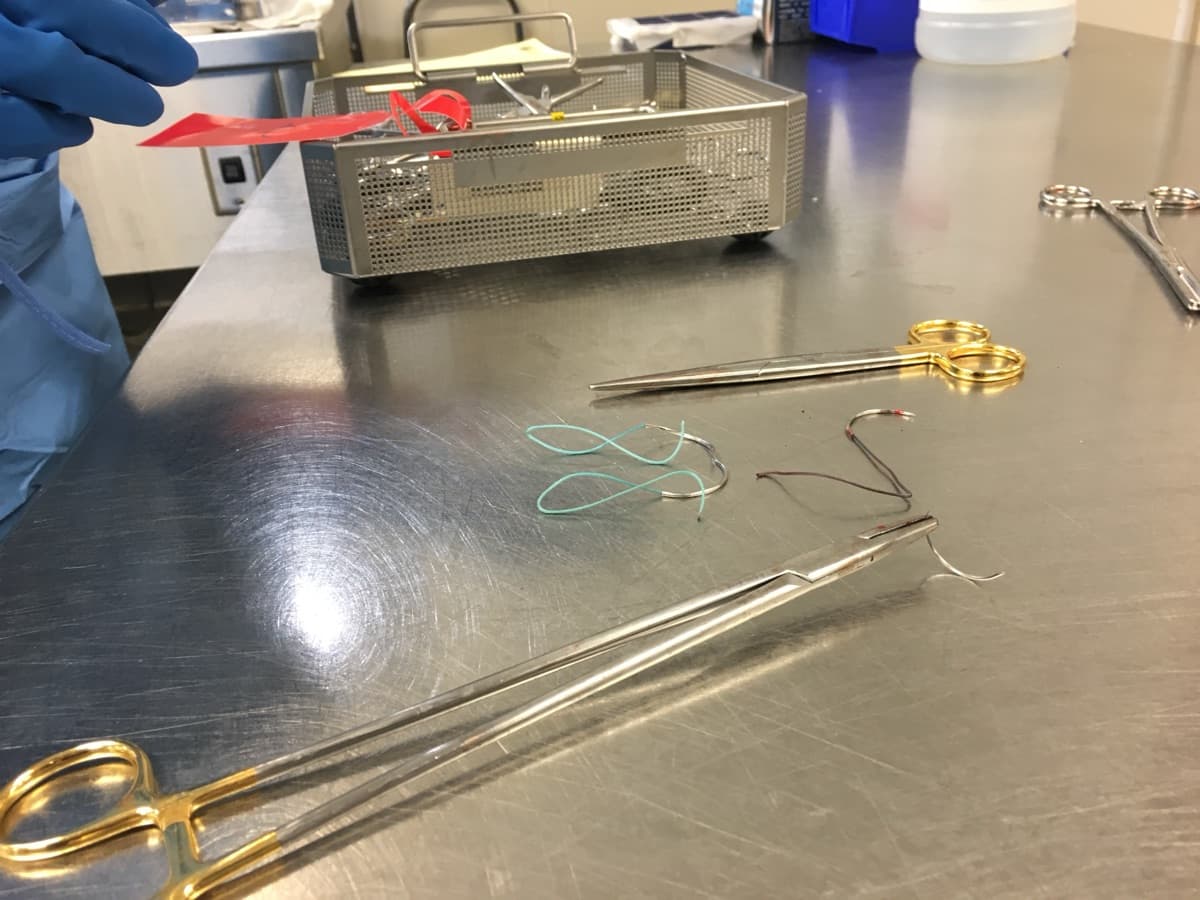
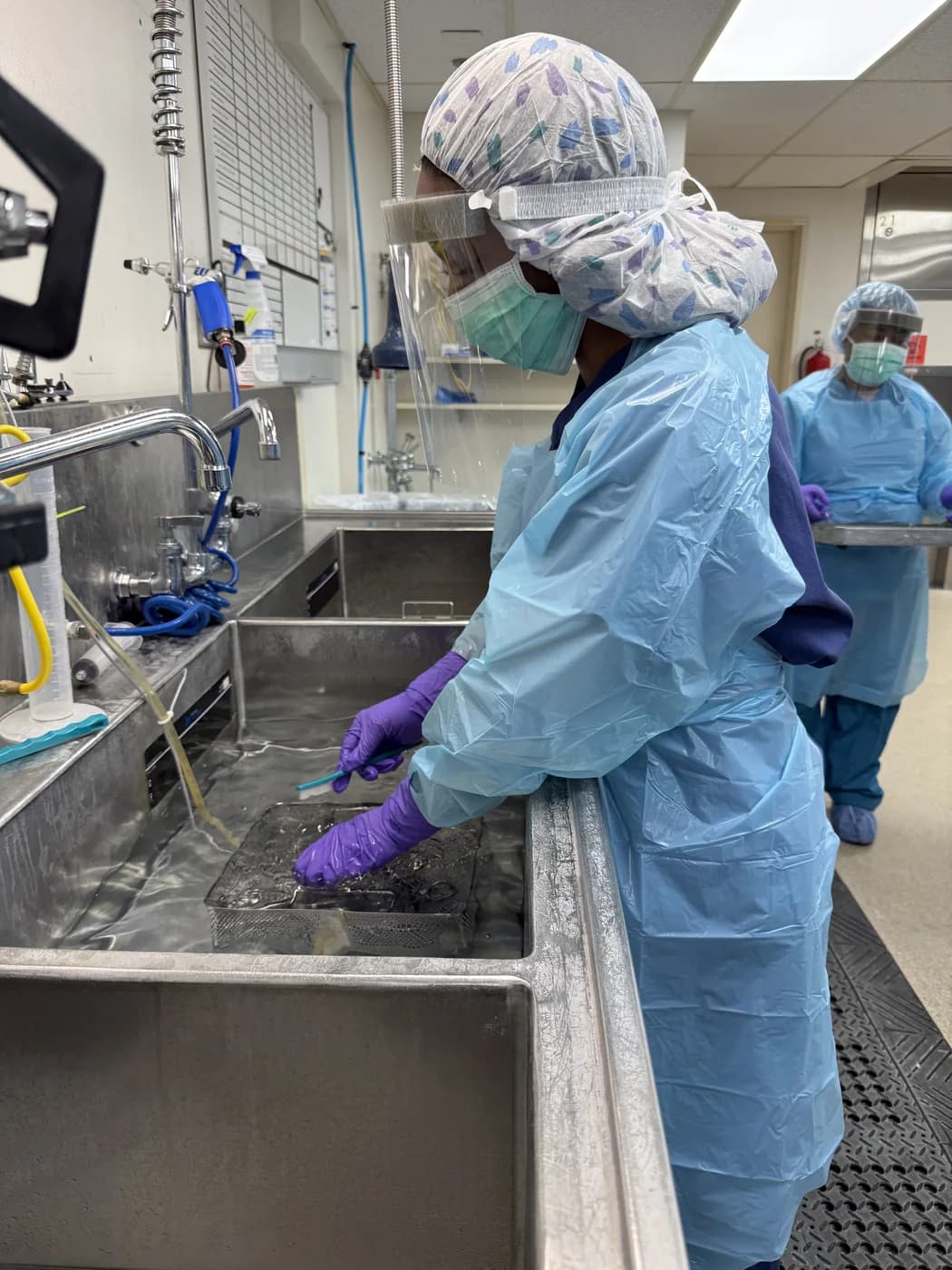
Here's a concrete example of the difference. A slide-reader can tell you that lumened instruments must be brushed and flushed per the IFU. An instructor who has worked decon can tell you what a partially occluded lumen feels like when you flush it, which suction tips are notorious for hiding bioburden, why you brush below the waterline, and what it's like to make that call at hour seven of a shift when the OR is calling for the tray. One of those lessons survives contact with a real department. The other evaporates the week after the exam.
The gap shows up everywhere:
- In troubleshooting. A student asks why a biological indicator might fail even when the printout looks clean. An instructor who has lived a recall can walk through the real investigation — and what it felt like to quarantine every load since the last good result.
- In prioritization. Textbooks present every step with equal weight. Practitioners know where new techs actually get hurt: the corner everyone is tempted to cut, the instrument everyone mis-assembles, the moment production pressure first shows its teeth.
- In war stories. The right story at the right moment — a near-miss, a catch that saved a case — turns an abstract standard into something a student will never skip. You cannot fake these, and students can tell.
When you evaluate a program, ask directly: has my instructor worked in a sterile processing department? The answer changes everything.
They hold real credentials — and keep them current
Talk is cheap; letters after a name are verifiable. An instructor who holds the credentials they're preparing you for — CRCST, and ideally the specialty and leadership stack beyond it (CIS, CER, CHL) — has passed the same exam you're studying for and done the same recertification work they're telling you matters. At ATS, both of us hold all four, and we maintain them the same way we tell our students to: CRCST recertification takes 12 CE points every year, and treating that as a habit rather than a chore is part of the job. (Our CEU resources exist because we practice this ourselves.)
Standards evolve. Instruments change. The instructor who still renews their own credentials — and keeps learning — is the one whose teaching stays current and honest. The field will look different in five years; you want a teacher who is moving with it, not one coasting on what the field looked like when they left.
They teach the "why," not just the "what"
Anyone can recite a sterilization parameter. A great instructor explains why it exists — what failure it prevents, what happens to a patient if it's ignored. Students who understand the reasoning retain it, troubleshoot with it, and carry it into a real department. Students who only memorize it forget it the week after the exam.
This matters beyond test day. The techs who advance — toward lead, supervisor, and beyond — are the ones who can teach a process, and you can't teach what you've only memorized. The why is also the backbone of a healthy department: a tech who understands the reasoning can defend the process when production pressure pushes against it, which is the whole subject of Building a Culture of Quality.
They meet students where they are
Many people entering this field are career-changers, parents, and first-time students who haven't been in a classroom in years. A great instructor makes that a strength, not a barrier:
- Patience over polish. No question is treated as a dumb one. The moment a student becomes afraid to ask, the learning stops — in a classroom or a department.
- Multiple paths in. Some students thrive in a live virtual class; others need the room and the instruments of in person. Good instruction adapts. A nursing assistant switching fields, a warehouse worker who's brilliant with his hands but hasn't taken a test in fifteen years, a new parent studying after bedtime — we've taught all three, and they don't need the same thing from us.
- Plain English first, jargon second. The vocabulary of this field is real and necessary, but a great instructor builds the concept before the terminology, so the words attach to something the student already understands.
- Support past the exam. The best instructors stay involved through certification and into internship placement — because the goal was never a test score. It was a career.
They tell you the truth about the job
A great instructor is honest recruiting, not just good teaching. Sterile processing is meaningful, stable, skilled work — and it is also physical, sometimes repetitive, occasionally high-pressure, and frequently invisible to the rest of the hospital. Students deserve to hear all of that before they invest a dime. We'd rather lose an enrollment than launch someone into a career built on a sales pitch. (If you're still deciding whether the field fits you, start with What Is Sterile Processing? and How to Become a Sterile Processing Technician.)
The same honesty applies to the program itself: what it costs, how long it takes, and what happens if the exam doesn't go your way the first time. It's why we publish our prices plainly, run 16-week cohorts on the full HSPA 9th Edition curriculum, and consider course retakes on a case-by-case basis.
They build a room, not just a roster
The best classes we've ever taught weren't lectures — they were small communities where students quizzed each other, celebrated each other's exam results, and passed along job leads. That's a thing an instructor builds on purpose: learning names, pairing strugglers with mentors, keeping a private Discord alive between sessions so nobody studies alone at 11 p.m. Sterile processing departments run on teamwork; the classroom should rehearse it.
Questions to ask before you enroll — anywhere
Use these on any program you're considering, including ours:
- Has my instructor worked in a sterile processing department — and how recently?
- What credentials do they hold, and are they current?
- Will I get live access to them, or just recorded videos?
- How does the program get me hands-on practice and my certification hours? (Here's why that matters so much.)
- What support exists after the exam — and can I talk to a graduate?
A program that welcomes these questions is telling you something. So is a program that dodges them.
Aseptic Technical Solutions is an independent training provider and is not affiliated with HSPA. Our curriculum follows the HSPA 9th Edition.
This is the bar we hold ourselves to at ATS, and it's why we built the school around real instructors and hands-on practice — more on that in Why Hands-On Training Still Wins, and more about us on the About page. If you're ready to find the right program, start with our free Career Roadmap.
Frequently asked questions
Why does instructor experience matter if the curriculum is standardized?
The HSPA 9th Edition sets what's taught, but not how well it transfers. An instructor who has worked a decon shift teaches judgment, prioritization, and real troubleshooting — the things that make a graduate useful on day one — not just exam content.
What credentials should a sterile processing instructor hold?
At minimum, a current CRCST — the credential they're preparing you for. The fuller stack (CIS, CER, CHL) shows depth across instruments, endoscopes, and leadership. Both ATS co-founders hold all four and renew them annually.
How can I tell if a program's instruction is actually live?
Ask directly: will a real instructor answer my questions in real time? Recorded videos have their place, but every ATS path includes access to working practitioners — and our virtual and in-person cohorts are taught live.
What should instructor support look like after the exam?
It shouldn't end at the exam. Look for help with hands-on hours, internship placement, and honest career guidance. A clear, written retake policy also tells you the program stakes something on its own teaching.
What's a red flag when evaluating a program?
Vagueness. If a program can't tell you plainly who teaches, what they've done in the field, what the program costs, or how you'll get hands-on practice, it's selling an exam result rather than a career.